
Why One-Off Creator Ads Don't Build Trust
3 min read · October 20, 2026 · Adapted from Sundae Tuesdae, Issue 30
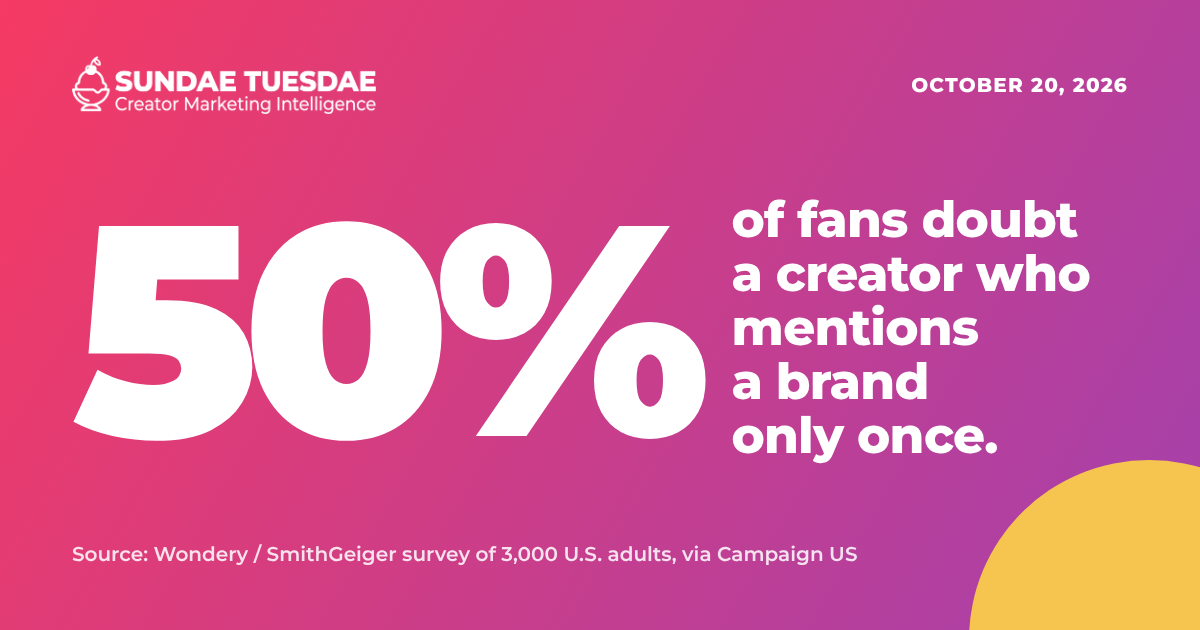
Half of podcast fans think a one-time ad read means the host didn't like the product.
That's from a Wondery survey of 3,000 people about their favorite creator shows. Seven in ten said they need to hear about a brand across several episodes before they believe the endorsement. Wondery sells those ads, so take it with a grain of salt. But anyone who's heard a host read the same mattress spot for two years knows the feeling. By episode six you half believe the guy.
The same pattern on TikTok Shop
The same thing showed up on TikTok Shop this week, with a completely different kind of creator. Flywheel, the commerce agency owned by Omnicom, looked at 1.5 million product samples brands sent to TikTok Shop affiliates. Creators posted a video in 47% of cases, and only 14% generated any sales. One video averaged $7.19 in sales. Affiliates who posted twenty or more averaged $74.07 a video. Ten times the return, for showing up again.
Flywheel's advice follows from that. Send thousands of samples at first, narrow to the creators you can work with repeatedly, and pay the best ones flat fees or bonuses on top of commission. Most of the sampling budget buys information about who won't post. The real program is the small group that keeps going.
Fundraisers figured this out a long time ago
Any development director will tell you the first gift is the introduction. Tiltify, which runs creator charity fundraisers, says creators who run three or more campaigns a year see donor retention 36% higher than one-and-done fundraisers.
Why brands still buy flights
And yet a lot of creator marketing still gets bought like a flight. A post, a story, a link in bio, a recap deck, see you next quarter. Flights are easy to get approved, and the recap deck looks great. In my experience it's also the most expensive way to buy trust, because every quarter you pay to get introduced again.
Part of the reason is where the money sits. Nestlé is pulling creator work out of its PR, media and influencer silos into one discipline. Daniele Tundo, who runs digital content, social media and influencer marketing there, described the goal as "creative marketing with a dedicated strategy, dedicated approach, processes and therefore measurement and funding as well." The money is the part I'd watch. When creators get paid for out of whatever campaign is running, the program usually stops when that campaign does, and nobody ever actually decides to stop it.
For a sense of scale, CreativeX, which tracks creative for Nestlé, says most brands in its data put 10 to 20% of media spend into creators, and that returns start to drop off around a third. Tundo also says the industry still can't measure creators across platforms in one framework, so even Nestlé is building the structure ahead of the measurement.
What frequency looks like with creators
Bob's Discount Furniture shows one version. The first season of its microdrama, "Till Decor Do Us Part," drove $9 million in attributed sales. The second, released weekly since mid-September, hands the show to six creator couples who write, shoot and produce the episodes themselves. A weekly series puts the repetition into the format.
None of this is complicated. Pick fewer creators, keep them around longer, and pay for them out of a budget that doesn't expire with the quarter. That works for a soda brand, and it works for a food bank.
— Jeremiah Rosen, Sundae Collective
Adapted from Sundae Tuesdae, Issue 30, which also covers Meta's ban on ads that link to TikTok, more than $1 billion in influencer disclosure suits, and PepsiCo's plans for employee creators. Get Sundae Tuesdae every Tuesday.
Planning 2027 around fewer creators and longer runs? We'll help you build the roster and the budget to match. Get in touch.
Sources
- Campaign US, on Wondery's "Brand Building in the Creator Age" (October 14, 2026)
- Digiday, "TikTok Shop success = small creators + more videos" (October 14, 2026)
- NonProfit PRO, on Tiltify's 2025 Giving Season Report (December 4, 2025)
- Next in Media, "Brands Like Nestle Are Starting to Reorganize Their Media Ops Around Creators" (October 13, 2026)
- Chief Marketer, on Bob's Discount Furniture's microdrama (October 14, 2026)