
How Political Campaigns Used Creators in the 2026 Midterms
3 min read · November 3, 2026 · Adapted from Sundae Tuesdae, Issue 32
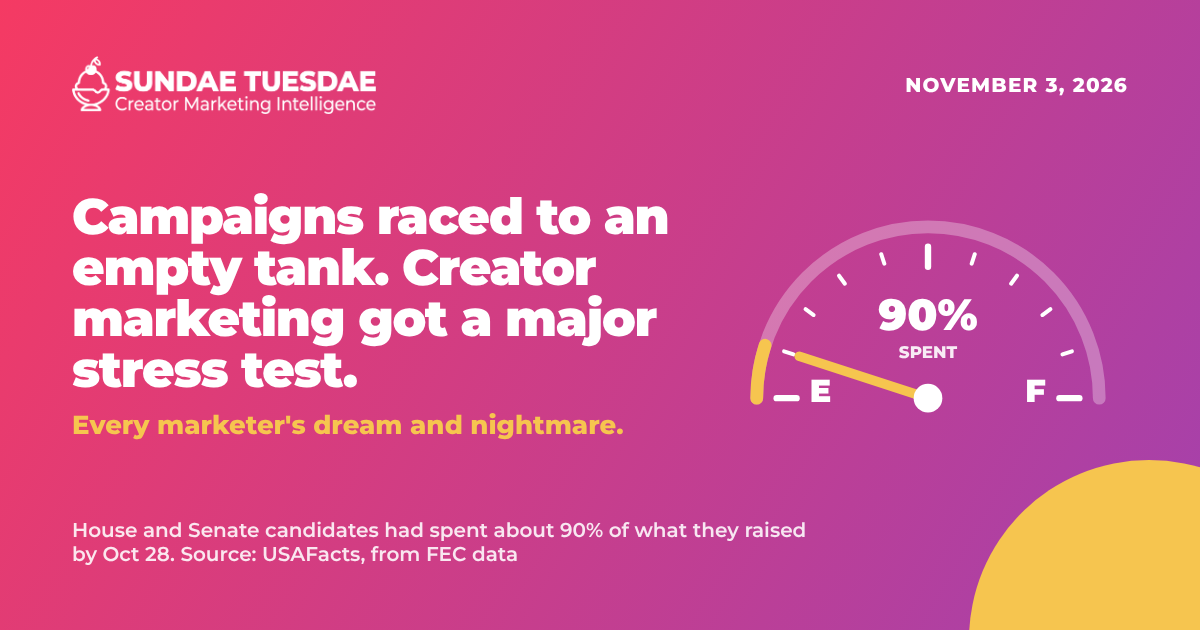
Campaigns have until Election Day to spend what they've raised. A week out, House and Senate candidates had already spent about 90% of it. When the deadline is that hard, where the money goes in the final weeks is a pretty honest read of what works. This cycle, a lot of it went to people voters already listen to.
National voices were the easy part
Some of those voices are national and plainly political. The RNC gave more than 100 influencers "creator" credentials at its midterm convention. The DNC's creator program has passed 550 members, and most Democratic candidates now send their creator networks ready-made clips and talking points every morning.
Campaigns also started earlier this cycle and worked with more creators than in past midterms. Many now keep standing rosters they can brief on short notice, from national commentators to creators with a few thousand local followers. A lot of brand programs still recruit from scratch for each campaign.
The trust lived close to home
The local work is where it got interesting. When MoveOn brought creators to Dallas to cover the Republican convention, it used only Texans, partly because, the organizer said, Texans don't like hearing from outsiders. A Pennsylvania pollster explained why campaigns go to creators with 20,000 followers instead of ones with millions: you know who's there and how engaged they are. Strategists on both sides told the Washington Post that Republicans have been better at this, reaching voters through creators whose content is culturally conservative more than overtly political.
A lot of the most useful voices weren't political at all. A beauty creator working with the nonpartisan When We All Vote reminded his 600,000 followers to register while doing his makeup. A Latina creator who used to post beauty and fashion tips now runs get-out-the-vote events in swing districts.
My favorite phrase of the cycle came from the agency behind a pre-election rally for thousands of creators. It said its job was to "de-risk" political speech for creators worried about alienating their audiences. That's brand-safety language. Campaigns hit the same fear brands do, and their answer was good information plus room for creators to say it their own way.
Fundraising is where the playbooks split
Then there's fundraising. On Friday alone I got nearly two dozen fundraising texts, from candidates in Louisiana, Alaska, Nebraska and Texas, a party committee promising a 400% match, and a former congressman assuring me he wasn't sending this text to everyone. One industry estimate puts this year's political texts at 25 to 30 billion. A conservative writer got one last month that opened "From Trump." His own campaign has known what that name is worth for a while: in 2024 it told Republican vendors to hand over at least 5% of anything they raised using his name or likeness.
No brand could run that play. A brand needs a contract to use a famous name, consent to text you at all, and a match it can actually pay out. Political texts are exempt from the Do Not Call registry and most commercial spam rules, so for most senders the famous name costs nothing, and the list gets worked until it stops answering.
What to take into 2027 planning
Most brand programs are built at one altitude, usually national, around a handful of big names. Campaigns worked national, state and local at the same time, and the trust they earned mostly lived close to home. For 2027 planning, I'd look hard at how much of the roster sits at the national level and how much sits in the cities and communities where your customers actually are.
This piece first ran in Sundae Tuesdae for November 3, 2026. Subscribe to get it every Tuesday.
Political ad money starts leaving the market this week. If you want creator content ready for the holiday push, we can help. Get in touch.
Sources:
- USAFacts: How much are candidates spending for the midterm? (FEC data)
- Digiday: Why the 2026 midterms could mark a turning point for influencers in political campaigns
- Texas Monthly: RNC midterm convention influencers
- City & State Pennsylvania: Under the influencers
- Washington Post: How creators are shaping the midterm elections
- NPR: Democrats, Latino voters and influencers
- Campaigns & Elections: Creator rally aims to de-risk politics for influencers
- Erick Erickson: This is disrespectful and not working
- The Verge: Political texts and the midterm elections
- NBC News: Trump operation asks Republicans to share fundraising haul
- FCC: Rules for political campaign calls and texts