
How to Pay Creators on Performance: Inside Wispr Flow's 7% Program
3 min read · October 13, 2026 · Adapted from Sundae Tuesdae, Issue 29
Wispr Flow, the voice-dictation app, puts 500 to 700 new creator ads into Meta every month, and it pays for them in one of the more interesting ways I've seen. Hector Serrano, who built the program, laid the whole thing out on X last week.
How the pay works
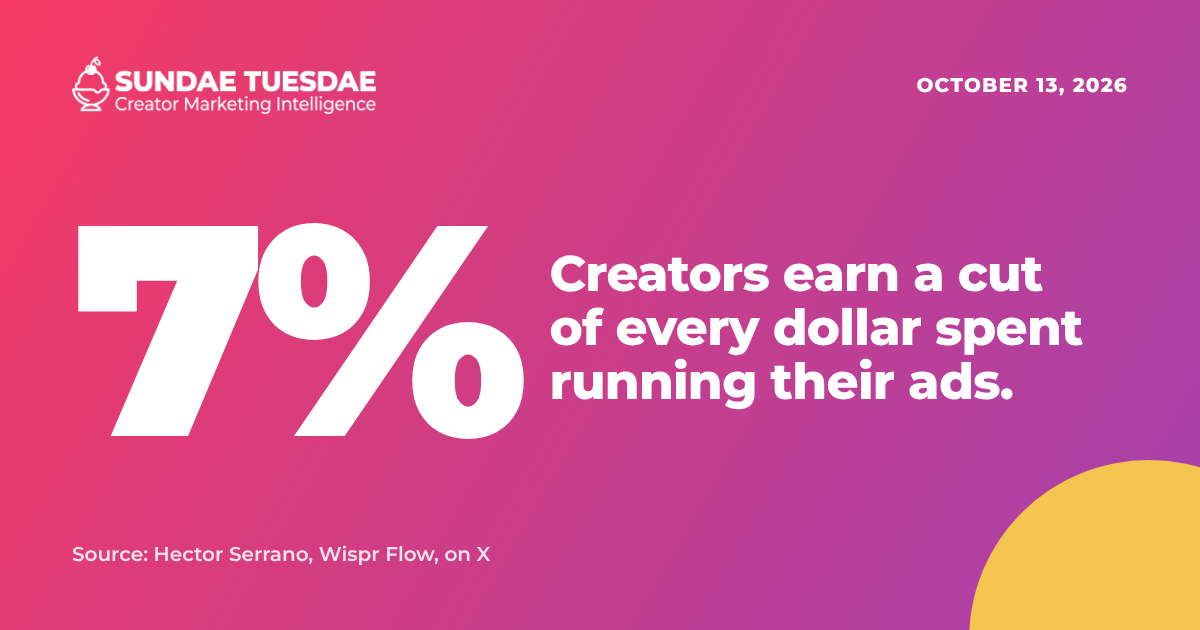
Wispr doesn't pay creators per video or traditional commissions. It pays them 7% of the ad spend behind their videos. If Meta keeps spending on your ad, you keep earning. If the ad dies on day two, so does the paycheck. The creator ends up wanting exactly what the media buyer wants, and in my experience that almost never happens by accident.
New creators get a floor while they learn and earn. Edgar Li, who broke the program down on LinkedIn, puts it at $1,000 for 25 videos, set against compensation. That's $40 a video and a lot of speculative production before the floor applies. Once a creator is earning, nobody thinks about the floor again.
Built like a sales team
After that, it runs like a sales team, the old-fashioned kind. Start with four or five people, each brought in to fill a hole in the ad account. Recruit by hand. Coach them every week. Double the roster when it's working, up to about fifty. And no copycats, because Meta lumps lookalike talking-head ads together and throttles them.
Why it started an argument
The breakdown set off a real argument among people who work with creators for a living. Some called the model exploitation. Others, Hector included, describe a small, well-coached team that creators are glad to be part of. Both camps have a point, and most of the distance between them comes down to terms.
It's also what fresh eyes look like. Tying creator pay to performance has been on the industry's to-do list for about a decade. Serrano is 22. He didn't inherit our assumptions about how creators are supposed to get paid, so he built something simple.
Where the math gets thin
The model wants real spend. At $30,000 a month in paid social, 7% is $2,100 to split across the whole roster, which buys a lot of goodwill and not many creators. Even at Wispr's scale, 500 to 700 new ads a month across about fifty creators is ten-plus videos each, and Meta puts most of the money behind a few winners. The rate and the volume decide whether this works for everybody.
And if you sell physical products, paying creators a share of sales sounds simpler than it is. Attribution windows, margins and returns all have to be argued out before the first check goes out.
Who it fits
It suits a brand with steady paid social spend that runs through creative faster than it can make it, and a product that can be shown working in a short video, with a purchase or sign-up the ad platform can count.
At Sundae we've paid creators in all sorts of ways over the years, and this structure is the one I find most interesting right now. Done well, it lines everyone up. The brand, the creator and the ad account all end up rooting for the same video.
None of it needs a new platform. It needs people, on the brand's team and among its partners, who are willing to question how creators get paid and build something better.
— Jeremiah Rosen, Sundae Collective
Adapted from Sundae Tuesdae, Issue 29, which also covers Shapermint's TikTok Shop affiliates, Chili's creator-led paid social, and what Alo's IP takedowns cost it with its own fans. Get Sundae Tuesdae every Tuesday.
Thinking about paying creators on performance? We'll help you work out the structure and the math. Get in touch.
Sources
- Hector Serrano on X (October 8, 2026)
- Product Market Fit, "How WisprFlow Built Its Paid Ads Program" (October 11, 2026)
- Edgar Li on LinkedIn (October 10, 2026)